

Hello and welcome to this week’s edition of Safety Pro Weekly.
We’ve all struggled with getting our safety ideas approved.
We see the risk. We know the solution. If only management would see things our way, we could save a lot of future injuries. It seems like a no brainer.
So we spend a couple of hours putting together a pitch, bring it to senior leadership, with high hopes and … boom, it gets rejected out of hand.
Or worse, they smile and nod and say, “We’ll give it some thought” with a lack of enthusiasm that guarantees they will never do anything of the sort.
You’re left wondering what went wrong. Was it a bad idea? Did you fail to explain it properly? Are your senior management people a bunch of safety-illiterate folks who only care about the bottom line?
Here’s the thing:
Most safety ideas don’t get rejected because they’re bad. They get rejected because they’re presented the wrong way.
Safety professionals often lead with:
Regulations
Compliance requirements
“It’s the right thing to do”
And while those things matter, they’re rarely what decision-makers prioritize.
If you want a better chance of getting your ideas approved, you have to frame them in ways that connect with the people approving them.
Quick sidebar:
The Safety Leadership Blueprint is a practical, no-fluff course and community designed to help safety professionals move beyond compliance and start influencing real change.
Built around 7 core pillars including engagement, leadership, and systems that actually stick, it shows you how to connect safety to business priorities, gain buy-in from leadership, and build a program that works in the real world, not just on paper.
We’re launching June 1st. To join the waitlist, comment “Blueprint” below.
Why This Happens
We Speak in “Safety Language,” Not “Business Language”
Safety professionals are trained in safety, so we tend to think in terms of:
Hazards
Controls
Compliance
Risk
All of those wonderful things we were taught in University or College. Which is perfectly understandable, and these are valid concerns.
On the other hand, business leaders tend to think in terms of the things they were trained to measure:
Cost
Productivity
Efficiency
Reputation
Which are also valid concerns. Let’s face it, if the business isn’t successful, safety becomes a moot point.
When those two perspectives don’t align, the message gets lost and your ideas fall on deaf ears. It’s like trying to argue with someone who speaks an entirely different language.
We Assume the Value Is Obvious
To a safety professional, the benefit of a guard, procedure, or training program is clear. To a manager juggling production targets and budgets, this isn’t always so obvious.
If the value isn’t clearly translated, the idea feels like it’s just extra work and extra cost for an unclear return.
To get a positive response, you’ll have to pitch the benefits and tangible outcomes.
Leaders respond more strongly to:
What improves?
What gets easier?
What gets reduced?
What efficiencies are you creating?
Instead of:
“We need to fix this hazard…”
Try:
“This change will reduce downtime caused by jams and lower the risk of injury at the same time.”
Same idea. Completely different impact.
How to Fix It
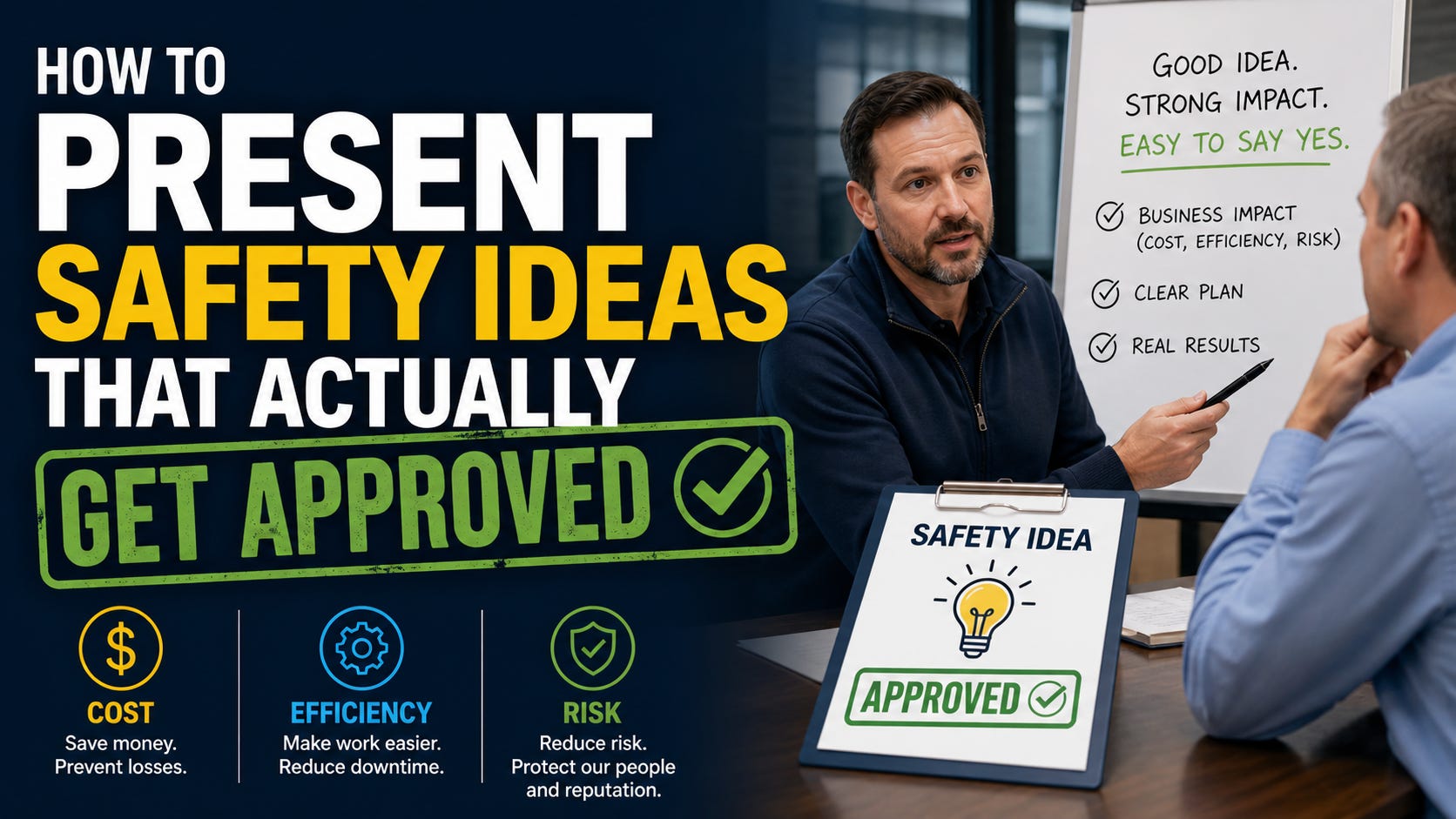
Before presenting any idea, translate it into these three lenses:
1. Cost
What does this save or prevent?
Direct costs (injuries, downtime)
Indirect costs (retraining, delays, morale)
2. Efficiency
Does this make work smoother or faster?
Will this initiate reduce rework, stoppages, or confusion?
3. Reputation / Risk
What happens if we don’t act?
Consider regulatory risk, client perception, internal trust.
If your idea hits at least one of these clearly, it becomes much easier to approve.
Make It Easy to Say Yes
Most decisions are not about whether something is a good idea. They’re about how hard it is to implement.
So, the more you can reduce friction, the better chance you’ll have.
Keep proposals simple
Outline clear next steps
Estimate time and cost upfront
Offer a pilot or trial if possible
3. Tie It to What Leadership Already Cares About
Pay attention to what your organization is focused on:
Production targets
Cost reduction
Quality
Customer satisfaction
Then connect your idea directly to that priority.
Example:
“This isn’t just a safety improvement, it saves us a production step and helps us meet our targets.”
Apply This Tomorrow
Take one safety idea you’ve been thinking about and rewrite it using this structure:
Outcome: What improves?
Business Impact: Cost, efficiency, or risk?
Effort: What’s required to implement?
Then write it out it in one short paragraph. If you can’t explain it clearly in one paragraph, you need to rethink your proposal.
Complexity kills engagement. The longer your explanation takes, the more your audience will tune you out.
When you present your idea:
Keep it concise.
Solve one problem.
Sell the outcome.
The best safety ideas don’t win because they’re the most technically correct.
They win because they’re understood.
If you can connect safety to what the business already cares about, approvals become much easier, and your influence grows with it.
That’s it for this week, let me know if this resonates.
Cheers,
Dan.


